 How-to
How to Clear Stubborn Drain Clogs at Home
Last Updated: November 5, 2026
Quick Summary
Clear stubborn drain clogs by diagnosing the blockage first, then trying hot water for grease or a plunger for local blockages. If two remedies fail, move to a drain snake for physical removal rather than repeating the same pour. Chemical cleaners are a last resort because their heat can damage pipes and joints.
- If every drain backs up at once, stop and call a professional for a main-line blockage.
- Baking soda and vinegar fizz but will not clear a hair clog or hardened blockage.
- Block the overflow hole with a wet rag before plunging so pressure goes down the drain.
- Feed a drain snake slowly and never force it, or you can scratch a plastic P-trap.
- Pour cooled cooking grease into a container and run hot water 30 seconds after each kitchen use.
Table of Contents
- Diagnose the Clog Before You Reach for a Tool
- Home Remedies for Stubborn Drain Clogs: What Works and What Doesn't
- How to Use a Plunger for a Clogged Drain
- How to Use a Drain Snake Without Damaging Pipes
- Chemical Drain Cleaner Risks and Safer Alternatives
- Why Recurring Drain Clogs Keep Coming Back
- Frequently Asked Questions
Diagnose the Clog Before You Reach for a Tool
Stubborn drain clogs rarely clear because you guessed wrong about what caused them. Before you grab a plunger, figure out where the blockage sits and what it is made of. That single step saves time and prevents damage.
Start with location. If only one fixture drains slowly, the clog sits close to that fixture. If the bathroom sink, tub, and toilet all back up together, the blockage is deeper in the branch line or the main stack.
Then match the symptom to the likely cause:
- Kitchen sink: grease, food debris, or soap scum coating the pipe walls
- Bathroom sink and tub: hair buildup mixed with soap residue
- Toilet: too much paper or a foreign object
- Multiple fixtures: a deep clog in the main line
Watch out: a garburator hides debris but does not remove grease. Grease cools and hardens downstream, so a kitchen clog that keeps returning usually means fat is coating the pipe.
If every drain in the home backs up at once, stop and call a professional. That pattern often signals a main-line blockage that home tools cannot reach.
Home Remedies for Stubborn Drain Clogs: What Works and What Doesn't
Home remedies are worth trying first, but they are not interchangeable. Each one works on a narrow range of clogs, and knowing the mechanism tells you when to stop and move to a mechanical tool.
Hot water works by melting and mobilizing grease and soap scum that coat the pipe wall. It does nothing to hair or solid debris.
Baking soda and white vinegar is the most popular home remedy, but its reputation outruns its chemistry.
Salt and hot water is a mild abrasive and a weak grease cutter. It is not a fix for a solid blockage, and pouring salt into a drain with a partial clog can leave grit in the trap.
What the remedies actually compare to:
| Method | Mechanism | Best For | Weak Against | Realistic Outcome |
|---|---|---|---|---|
| Hot water | Melts grease | Grease, soap scum | Hair, solid debris | Clears slow grease drains; temporary on buildup |
| Baking soda + vinegar | Gas reaction, mild agitation | Light soap scum | Hair clogs, deep blockages | Freshens; rarely clears a true clog |
| Salt + hot water | Mild abrasive | Mild grease | Anything solid | Marginal; can leave grit |
| Plunger | Pressure | Most sink and tub clogs | Deep main-line clogs | Clears most local blockages |
| Drain snake | Physical removal | Hair and debris clogs | Grease-coated walls | Reaches past the trap; reliable on hair |
None of these replace mechanical removal for a true stubborn clog. Treat them as the first rung, not the whole ladder.
How to Use a Plunger for a Clogged Drain
A plunger for a clogged drain works by force, not by chemicals. Used correctly, it clears most sink and tub blockages in a few minutes.
- Block the overflow hole with a wet rag so pressure goes down the drain, not out the overflow.
- Add enough water to cover the plunger cup.
- Seat the cup fully over the drain opening.
- Push down firmly, then pull up sharply. Repeat 10 to 15 times.
- Pull the plunger away and check the water flow.
For a double sink, seal the second drain with a stopper before you start. Otherwise the pressure escapes sideways.
A common mistake is a weak, fast pump. You want a firm seal and a strong pull, not speed. If the water does not budge after two rounds, the clog is likely too deep or too solid for a plunger. Move to a snake.
How to Use a Drain Snake Without Damaging Pipes
A drain snake reaches past the trap to pull out the hair and debris a plunger cannot move. The trick is patience: feed it slowly and never force it.
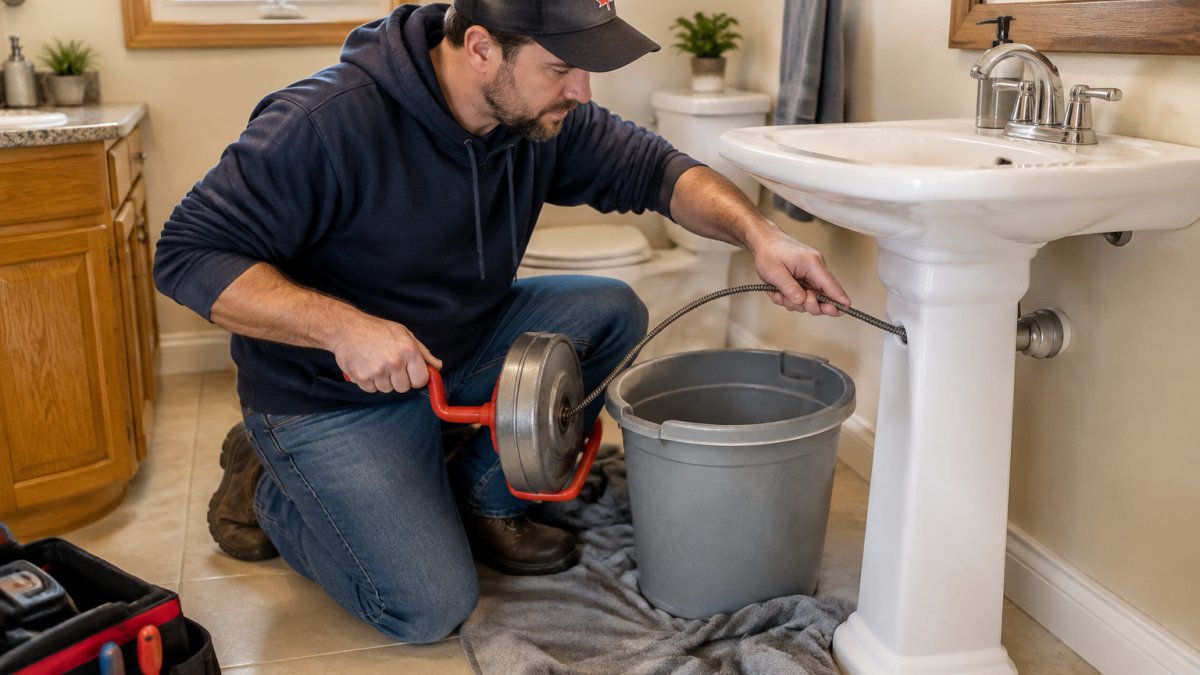
- Remove the drain stopper and set a bucket underneath if you can access the trap.
- Feed the snake cable into the drain by hand until you feel resistance.
- Crank slowly and let the cable work through the clog.
- When it stops, pull the cable back out and wipe off the debris.
- Flush with hot water to confirm the drain runs clear.
Watch out: cranking hard against a solid stop can scratch a plastic P-trap or push the clog deeper. If the cable will not advance, withdraw it and try a different angle.
A hair-removal tool is the simpler option for a bathroom sink. These short, barbed strips hook hair buildup close to the drain opening and cost very little.
If you cannot reach the clog, remove the trap. Place a bucket below, unscrew both slip nuts by hand, and clean the P-trap over the bucket.
Chemical Drain Cleaner Risks and Safer Alternatives
Chemical drain cleaners carry real risks, and most stubborn clogs do not need them. Before you buy a bottle, understand what is inside it and what it can do to your pipes and your body.
Two chemistries, two failure modes. Most retail drain cleaners are either caustic (sodium hydroxide or potassium hydroxide) or acidic (sulfuric acid or hydrochloric acid). Caustic products saponify grease and dissolve hair, but the reaction is exothermic, it releases heat. Acidic products are more aggressive and generate even more heat.
Read the label before you pour. The label tells you the active ingredient, the maximum contact time, and whether the product is safe for plastic, metal, or septic systems.
Safety basics that are not optional.
- Wear chemical-resistant gloves and splash goggles, not just glasses.
- Open a window and run the exhaust fan; fumes from caustic and acidic cleaners irritate airways.
- Never mix two cleaners, and never pour a second product in after a failed home remedy. Caustic plus acid can react violently and splash back.
- Never pour a cleaner into a drain that already has standing water and a plunger nearby, pressure can force the chemical back out.
- Keep children and pets out of the room until the product is flushed and the drain runs clear.
What to do if it fails. If a chemical cleaner does not clear the clog, stop.
Safer alternatives that handle most clogs.
- A plunger for pressure on sink and tub blockages.
- A drain snake or hair-removal tool for physical removal of hair and debris.
- A hot water flush for grease and soap scum.
- An enzyme-based maintenance treatment for slow drains; enzymes work slowly and suit prevention more than emergencies.
For a blockage that will not clear, mechanical removal is safer and more reliable than chemicals. Reserve chemical cleaners for the narrow case of a slow, grease-heavy kitchen drain where mechanical tools cannot reach, and only after reading the label and confirming the pipe material.
Why Recurring Drain Clogs Keep Coming Back
Recurring drain clogs usually mean the cause was never fully removed. Clearing the water flow does not always clean the pipe wall, so grease, soap scum, and hair can rebuild in the same spot.
A few habits stop the cycle:
- Pour cooled cooking grease into a container, not the sink
- Use a drain strainer in the kitchen and bathroom
- Run hot water for 30 seconds after each kitchen use
- Clear hair from the stopper weekly
- Flush the drain monthly with hot water
If the same drain blocks again after you have snaked it, the pipe may have a buildup or a partial collapse. A camera inspection finds the real problem. Persistent clogs in a rental or commercial property also point to a shared line issue that needs professional attention.
If the clog keeps returning, Peace of Mind Plumbing & Heating Ltd. can help with professional drain cleaning and diagnosis. Visit our website for current pricing and details on our service and 12-month guarantee.
Frequently Asked Questions
What is the best way to clear a stubborn drain clog?
Start with the least invasive method and escalate only if the water still drains slowly. A cup plunger works for many sink and tub clogs. If that fails, remove the P-trap and clean it, then use a hand-crank drain snake to reach deeper blockages. Avoid chemical drain cleaners until other options are exhausted because they can damage pipes. If the clog returns within a few weeks or affects multiple fixtures, call a licensed plumber to inspect the line with a camera.
How do you unclog a drain that will not respond to a plunger?
When plunging does not move the water, the clog is likely past the trap or packed tightly. Remove the P-trap and check for hair or grease buildup, then feed a drain snake down the branch line. For kitchen sinks, a garburator may need to be disconnected to access the drain. If the snake meets solid resistance, stop and call a professional. Forcing a snake can scratch pipes or break the cable inside the drain.
Can chemical drain cleaners damage plumbing?
Yes. Chemical drain cleaners risks include heat damage to PVC and metal pipes, especially when used repeatedly or in large amounts. They can also splash back and burn skin or eyes, and they rarely clear a full blockage. Many plumbers advise against them for older pipes or septic systems. If you do use one, wear gloves and eye protection, open a window, and never mix products. A plunger or snake is safer for stubborn drain clogs.
Why does a drain keep clogging after it has been cleared?
Recurring drain clogs usually mean the blockage was never fully removed or the pipe has a buildup of grease, soap scum, or scale that catches debris. A snake can punch a hole through a clog without cleaning the pipe walls. For kitchen drains, grease cools and coats the pipe interior. For bathroom drains, hair and soap scum combine into a sticky layer. A professional camera inspection can show whether roots, a sagging pipe, or heavy buildup is the cause.